Best Dirt Bike Trails in Arizona: The Complete Region-by-Region Guide
Arizona is one of the greatest dirt bike destinations on the planet, and most riders — even locals — only ever scratch the surface. In a single state you can rip open desert singletrack in the morning, climb technical rock in the afternoon, and, in summer, escape to cool ponderosa-pine trails at 7,000 feet. The variety is staggering, the riding season is effectively year-round, and public land access is enormous.
This guide breaks down the best dirt bike trails and OHV areas in Arizona region by region, with honest notes on terrain, difficulty, and access. Whether you own a bike or you're flying in and renting one, use this as your map to where the good riding is — and how to ride it legally and safely.
Why Arizona Is a Year-Round Dirt Bike Destination
Most riding destinations have a season. Arizona has geography. The state stacks multiple climate zones on top of each other, so when one area is unrideable, another is at its best.
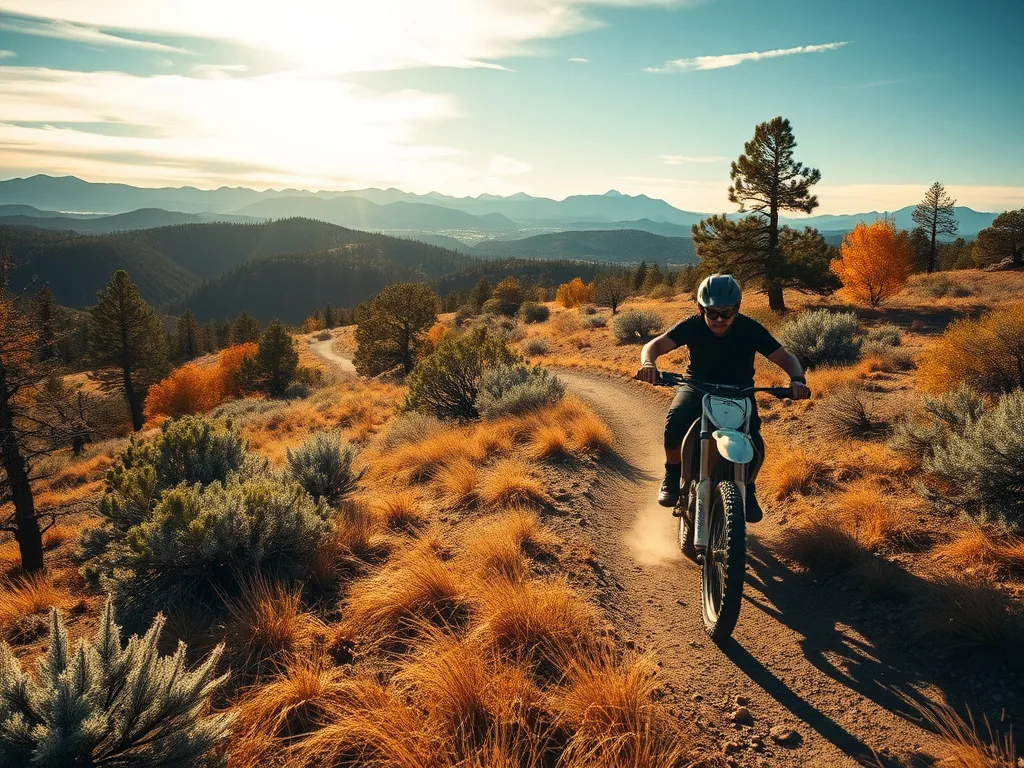
The low Sonoran desert — Phoenix, Tucson, Wickenburg, and the central basin — is prime from October through April, with mild temperatures and endless dry-weather riding. Come summer, when the desert floor regularly tops 100°F, riders simply move up in elevation. The high country around Flagstaff, Prescott, and the Mogollon Rim stays cool and green through the hottest months, with pine-forest trails that feel like a different state entirely.
That vertical range is the secret. It means you can plan a trip to Arizona almost any month of the year and find world-class riding somewhere in the state. It also means a multi-day adventure can link radically different terrain into one route — desert, canyon, red rock, and alpine forest in the space of a few days.
Before You Ride: Arizona OHV Rules
Great riding comes with responsibility. Before you drop a wheel on public land in Arizona, get the paperwork right.
- OHV decal: Off-highway operation on public land requires Arizona's $25 annual OHV decal (plus a processing fee) for machines under 1,800 pounds unladen. You can buy it through ADOT MVD offices, authorized third-party providers, or online. On a two-wheeled OHV it mounts on the left fork leg.
- Safety course: Since January 1, 2025, at least one owner per OHV must complete a free online safety course — roughly a 10-minute video and a 20-question quiz — before registering or renewing the decal. The requirement runs through June 1, 2027.
- Street-legal is separate: The OHV decal covers trails and designated areas only. Riding on public roads requires a bike registered street-legal through MVD, with a plate on the rear.
- Some areas need extra permits: A few managed areas, like Bulldog Canyon, require a separate free permit from the managing ranger district on top of the decal.
If all of that sounds like a lot, it's exactly why guided tours and rentals are so popular here — the operator handles the decal, permits, and current conditions, and you just ride.
Phoenix Metro & Central Desert Trails
The Valley of the Sun is ringed by riding, most of it within an hour of the city.
Table Mesa Recreation Area, just off I-17 north of Phoenix, is the close-in classic — more than 20 miles of rugged desert trail with steep climbs and descents, terrain for beginners through advanced, and a washboard-gravel access road that keeps the crowds honest. It's the go-to for a quick Valley session.
Bulldog Canyon OHV Area, in the Tonto National Forest's Mesa Ranger District, offers around 14 miles of low-to-moderate riding through canyons and rolling desert — mostly sandy with rocky sections. It's beginner- to intermediate-friendly, but remember it requires a free permit from the ranger district, so plan ahead.
For big days, the Boulders OHV Area near Lake Pleasant is a sprawling network of pristine desert trail spanning beginner to advanced — you can ride all day and not repeat yourself. Closer in, Desert Wells and Sycamore Creek off SR-87 near Fountain Hills are longtime Phoenix staging areas full of sandy washes and fast open desert, and St. Anthony near Florence Junction adds more open riding with easy staging and mixed two-track.
These central-desert areas are the backbone of Phoenix-area riding: accessible, varied, and ideal for everything from a first guided tour to a hard day of singletrack.
Box Canyon & Florence: Arizona's Most Popular Staging Area
If there's one name every Arizona rider knows, it's Box Canyon, south of Florence. It's arguably the state's most popular staging area — a huge mix of sandy washes, technical rock climbs, and wide-open desert that ranges from intermediate to genuinely advanced. The Coke Ovens area and the surrounding trail network can absorb a full day of riding across every skill level.
Box Canyon is spectacular, and it demands respect for one specific reason: flash flooding. The wash sections that make the riding so fun can flood violently during monsoon season — often from rain falling miles away, under a clear sky where you're standing. Never ride into a flowing wash, and check the forecast (including distant storms) before you go. In the right conditions, though, Box Canyon is Arizona desert riding at its finest.
Four Peaks & the Tonto Backcountry
Northeast of Phoenix, the terrain climbs. The Four Peaks and SR-87 backcountry in the Tonto National Forest trades open desert for rugged forest-service roads and technical trails that climb toward the Four Peaks Wilderness. It's higher, cooler, more remote, and more demanding — intermediate-to-advanced country with real scenery as a reward.
This is the transition zone between desert and high country, and it's a favorite for riders who want a bigger, wilder day without driving all the way to Flagstaff. Cell service gets thin, the trails get committing, and the payoff is some of the best backcountry riding within striking distance of Phoenix.
Tucson & Southern Arizona
Southern Arizona's marquee trail is Charouleau Gap, in the Catalina foothills north of Tucson. It's a famously technical, rocky route with a notorious optional obstacle known as "The Step" — a rite of passage for capable riders and a genuinely difficult challenge. This is advanced terrain; come prepared and ride with people who know the line.
For a more relaxed southern-desert experience, Redington Pass east of Tucson swaps saguaro forest for grassland and oak-juniper country, with sweeping views toward Saguaro National Park and Tanque Verde Canyon. It's beginner-to-intermediate terrain that rides beautifully in the cooler months, and a great introduction to riding around Tucson.
Southern Arizona often stays rideable when the north is snowed in, making it a valuable winter destination in its own right.
Sedona Red Rock Riding
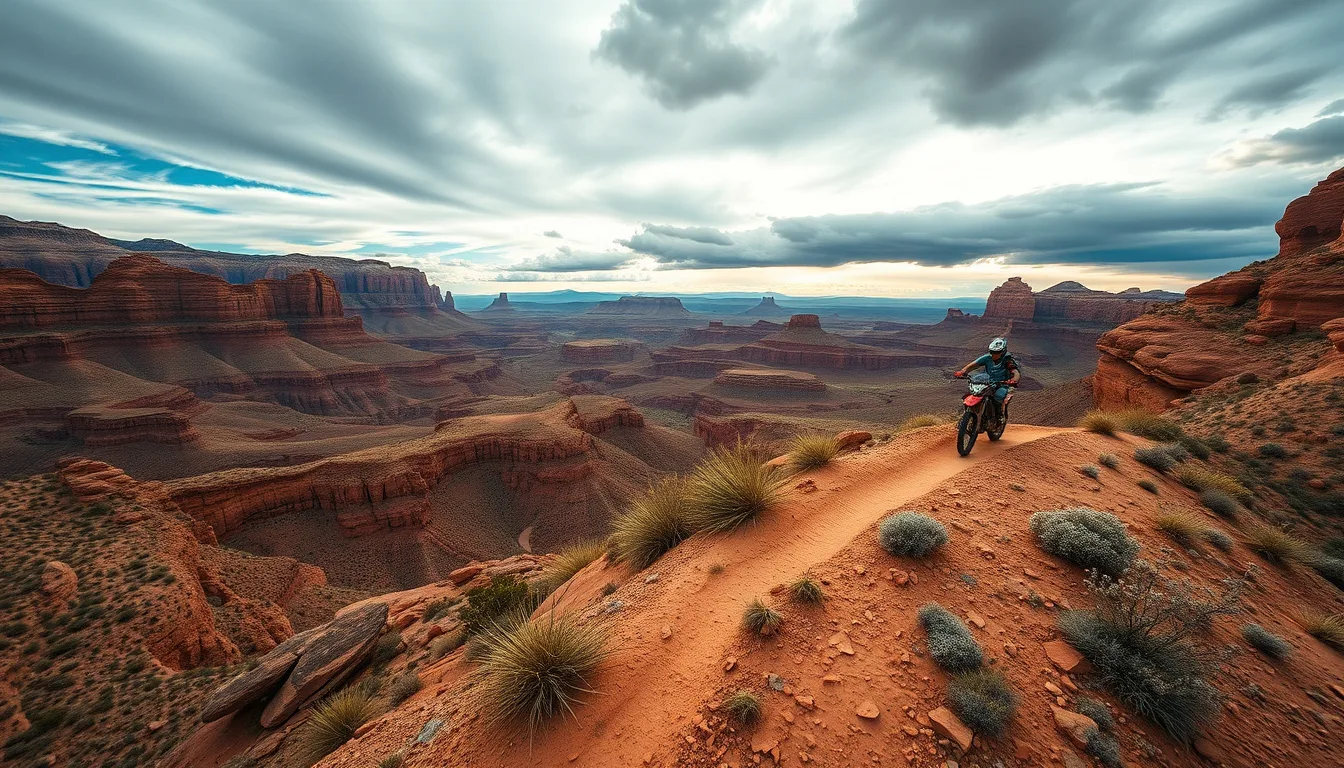
Nowhere else looks like Sedona. Riding here is scenery-first, and the standout for most riders is Schnebly Hill Road — a classic scenic forest-road route that's approachable for less-experienced riders while serving up some of the best red-rock views in Arizona. You'll stop constantly just to take it in.
For riders who want a challenge among the red rocks, the Soldier Pass and Van Deren Cabin area in the Coconino National Forest ranges from moderate to seriously technical. Soldier Pass in particular is difficult rock work — dramatic, demanding terrain that rewards skill and punishes carelessness. Sedona proves you don't have to choose between beauty and challenge; it has both, side by side.
Flagstaff & the High Country (Summer Riding)
When the desert bakes, the high country saves the season. Cinder Hills OHV Area, next to Sunset Crater northeast of Flagstaff, is the crown jewel — 13,500 acres of terrain ranging from flowing ponderosa-pine trail to steep volcanic cinder cones and craters. There's riding for every skill level, and at roughly 7,000 feet it's a genuine escape from the summer heat.
West of Prescott, Alto Pit OHV Area threads sharp turns and tree runs through ponderosa forest over granite and rock — a superb intermediate full-day ride. Farther northwest near Kingman, the Hualapai Mountain area offers cool, forested mountain roads and trails at elevation. Together, these high-country areas are what make Arizona a true year-round riding destination: when Phoenix hits 110°F, the pines up north are perfect.
Wickenburg & the West Valley Desert
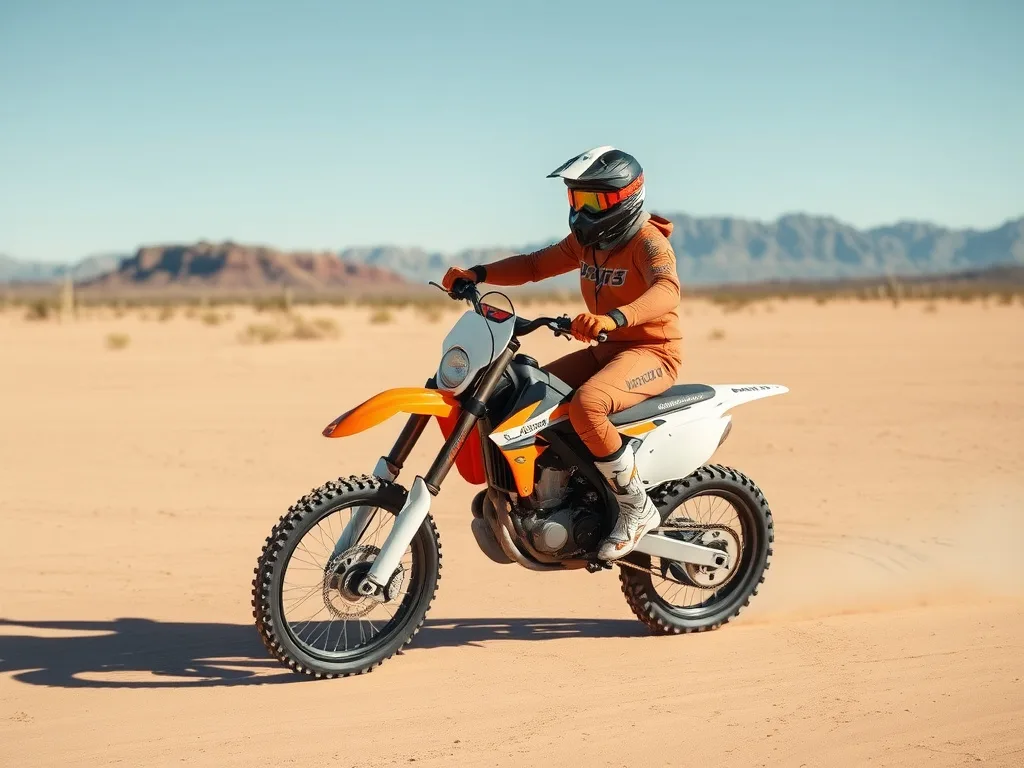
Northwest of Phoenix, the desert around Wickenburg is one of Arizona's great riding hubs and a launch point for many guided tours. This is classic open-Sonoran country — flowing singletrack, sandy washes, and long sightlines that let you carry speed and link miles together. It scales beautifully with skill: mellow two-track and gentle washes for beginners building confidence, and faster, more technical routes for experienced riders who want to open the bike up.
What makes the Wickenburg area special is the sense of space. You can ride for hours through saguaro forest and desert basin without crossing pavement, and the terrain rewards flow and rhythm over raw technical difficulty. For a first real desert ride — or a group with a wide spread of abilities — it's hard to beat. It's also far enough from the city to feel like genuine backcountry while still being an easy day trip from Phoenix or Scottsdale.
Trail Etiquette, Safety & Riding It Right
Arizona's riding is world-class because generations of riders — and the agencies that manage the land — have kept it open and healthy. Keeping it that way is on all of us, and good etiquette is simple:
- Stay on designated trails. Cutting new lines scars the desert and threatens access. Ride what's open, and respect closures and wilderness boundaries.
- Yield appropriately. Uphill riders and non-motorized users generally have the right of way. Slow down and pass with courtesy.
- Pack it in, pack it out. Leave no trash, and if you can, pick up what others left. The decal you buy funds maintenance; your habits protect the rest.
- Ride within your ability. The desert is remote and unforgiving. Pushing past your skill in committing terrain is how good days go wrong.
- Tell someone your plan. Share your route and return time, carry water and a basic tool and tire kit, and don't count on cell service in the backcountry.
Beyond etiquette, the two hazards that catch out-of-state and first-time riders most are heat and flash flooding. Treat hydration as non-negotiable — carry a pack, drink on a schedule, and add electrolytes when it's hot. And never underestimate a wash: monsoon runoff can arrive fast and from storms you can't even see. When in doubt, ride with people who know the area, or book a guide who reads these conditions for a living.
What Kind of Bike Do You Need for Arizona?
Arizona's variety means there's no single "right" bike, but a few things matter more here than elsewhere. Trail and dual-sport four-strokes in the 250cc–500cc range are the sweet spot for most riders — enough power for open desert and climbs, manageable enough for technical rock and tight singletrack. Good tires and suspension setup matter a lot on rocky, rutted desert terrain. And because so much riding happens in heat, a bike that runs cool and reliable is worth more than one that's simply fast.
If you're renting or riding a guided tour, this is handled for you — the fleet is matched to Arizona conditions and sized to your skill. If you're bringing your own machine, come with fresh tires, a serviced cooling system, and a tire-repair kit. The desert is hard on equipment, and a mechanical in remote country turns a great day into a long walk.
Arizona Trails by Skill Level
Not sure where to start? Here's a quick sort.
Beginner-friendly: Boulders OHV Area (easy loops), Bulldog Canyon (free permit), Redington Pass near Tucson, Schnebly Hill Road in Sedona, and the open desert near Wickenburg. Mellow terrain, room to learn, and forgiving surfaces.
Intermediate: Table Mesa, Desert Wells/Sycamore Creek, Alto Pit near Prescott, and much of Cinder Hills. Faster, more varied, with rockier sections and real climbs.
Advanced: Charouleau Gap ("The Step"), Soldier Pass in Sedona, the harder lines at Box Canyon, and the Four Peaks backcountry. Technical rock, committing terrain, and consequences — for experienced riders only.
How to Ride These Trails Without Owning a Bike
Here's the best part: you don't need a garage full of gear to ride any of this. If you're visiting Arizona, or you're local but not ready to buy, there are two easy paths onto these trails.
Rent a bike. A late-model four-stroke with a full gear package, by the half-day, day, or multi-day, lets you ride the areas above on your own schedule. We'll point you to trails that match your skill and the current conditions — and tell you exactly which OHV rules apply.
Book a guided tour. The fastest way to ride real Arizona terrain is to let a local lead you. Guided tours cover the best of every region, handle the permits and logistics, and adapt the route and pace to your group — from a first-timer's mellow desert loop to a technical backcountry day. First time in the state? A guide keeps you off the flash-flood-prone washes and on the trails that ride best that day.
Either way, the barrier to riding the best dirt bike trails in Arizona is a lot lower than it looks.
Frequently Asked Questions
What is the best dirt bike trail in Arizona for beginners? For first-timers, hard to beat the easy loops at Boulders OHV Area, Bulldog Canyon (with its free permit), Redington Pass near Tucson, or Schnebly Hill Road in Sedona. All offer forgiving terrain and room to build confidence. Guided beginner tours typically start in these kinds of areas.
Do I need a permit to ride dirt bikes in Arizona? Yes — off-highway riding on public land requires Arizona's $25 annual OHV decal, and since January 2025 at least one owner must complete a free online safety course before registering. Some areas, like Bulldog Canyon, also require a separate free permit from the managing ranger district.
When is the best time of year to ride in Arizona? October through April is prime in the low desert around Phoenix and Tucson. In summer, riding moves to the cooler high country near Flagstaff, Prescott, and the Hualapai Mountains. That elevation range is what makes Arizona a year-round destination.
Can I ride these trails if I don't own a dirt bike? Absolutely. Rent a late-model bike with gear included, or book a guided tour and let a local lead you on the best lines for your skill level. Both options handle the bike, gear, permits, and current trail conditions for you.
Ready to ride the best trails in Arizona? Book a guided tour, reserve a rental, or request a lesson and we'll get you on the dirt — safely, legally, and on the terrain that fits your skill. Request a ride online.
Ready to ride?
Bikes and full gear provided, all skill levels welcome. Book a tour, reserve a rental, or request a lesson.